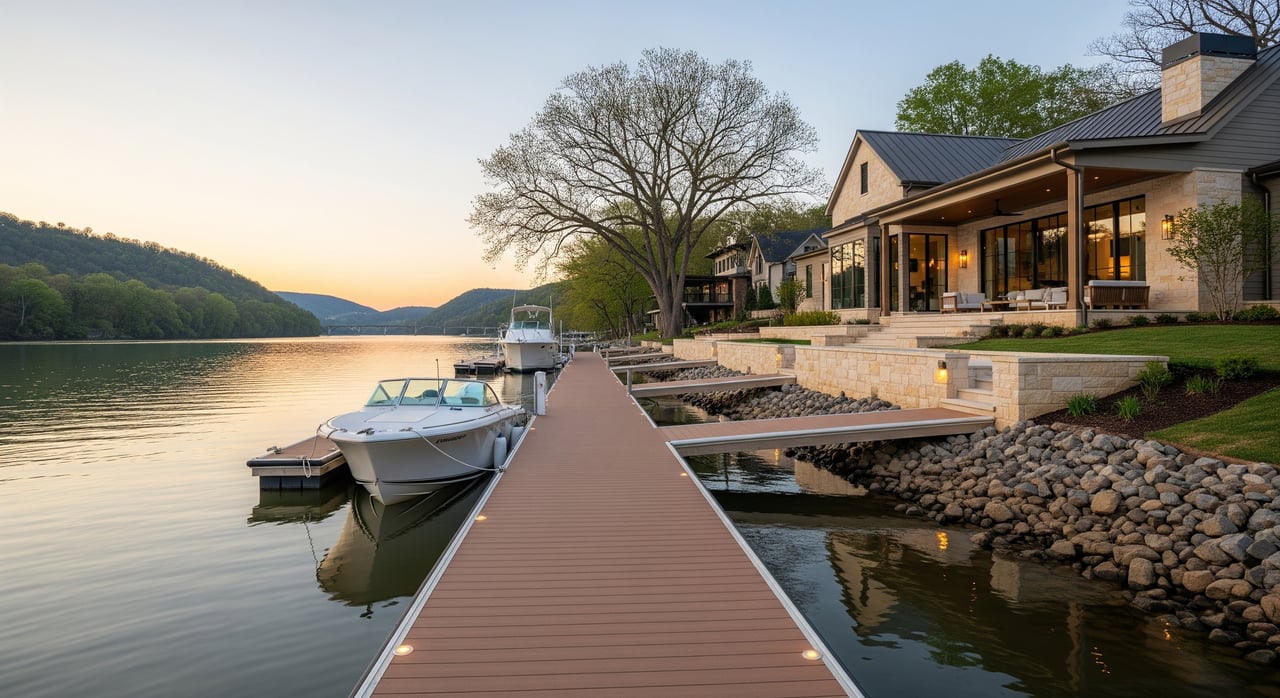
Waterfront Living In Northshore/Choto: Access, Docks, Lifestyle
November 27, 2025
November 27, 2025
Dreaming of stepping onto your own dock after dinner or launching kayaks at sunrise? If you’re eyeing waterfront living near Northshore Town Center and the Choto area in Knoxville, you’re not alone. The shoreline along Fort Loudoun Lake offers a mix of access types, dock options, and everyday lake perks that can fit many lifestyles. In this guide, you’ll learn how access works, what to know about TVA dock permits, and the key checks that protect your investment. Let’s dive in.
Not all “waterfront” is the same. In Northshore/Choto, you’ll find:
Each option affects daily convenience, resale, and maintenance. Clarify the property’s access type early so expectations match reality.
Fort Loudoun Lake is a Tennessee Valley Authority reservoir, and TVA manages docks and shoreline work. Most new or replacement docks, lifts, and bank stabilization require TVA approval. Review the process and standards through TVA shoreline construction permits to understand allowable sizes, locations, and materials before you commit. You can also track seasonal water levels that affect dock usability on the TVA Fort Loudoun Lake levels page.
In addition to TVA, expect local permits for construction, electrical work at the dock, and any shoreline improvements. Check Knox County Codes Administration for building and electrical permits and to understand setbacks. If the home is in a neighborhood with a community dock, review HOA covenants for rules on use, waitlists, and maintenance responsibilities.
Before you write an offer, verify who owns the existing dock and whether its authorization is current with TVA. Confirm any access easements in the deed, and request a recent survey showing the shoreline, improvements, and property lines. Ask about size limits, slip counts, and distance from channels because these can affect your boat choice and day-to-day use.
For substantial shoreline alterations or work in regulated wetlands, the U.S. Army Corps of Engineers Regulatory Program may require review. This is less common on TVA reservoirs but can apply to certain projects. Your due diligence should flag any activity that could trigger additional approvals.
Check the FEMA Flood Insurance Rate Map for the parcel’s flood zone. The FEMA Flood Map Service Center shows whether a lender will likely require flood insurance and helps you understand base flood elevation. Ask for an elevation certificate if available and review any past flood claims during disclosures.
TVA manages seasonal water levels for navigation, hydropower, and flood control. Drawdowns can change draft at your dock, and periods of higher water can increase erosion. Look for signs of historic high-water lines, debris accumulation, or shoreline wear, and ask if prior stabilization had permits.
Many lake-area homes use on-site septic. Verify the septic permit history, recent inspection, and capacity for planned bedroom counts or renovations. For power at the dock, plan on permitted electrical work and safe wiring practices, then consult the Knox County Health Department for septic questions and the county for electrical permits.
Life on Fort Loudoun Lake supports boating, paddleboarding, kayaking, and fishing for popular species like bass, crappie, and catfish. Check TWRA fishing resources for seasons and regulations. You can enjoy the lake even without a private dock by using nearby public ramps and services, while Northshore Town Center keeps dining, groceries, and daily conveniences close to waterfront neighborhoods.
For water quality and seasonal advisories, the Tennessee Department of Environment and Conservation Water Resources page is a good starting point. Staying informed helps you plan safe swimming, fishing, and shoreline maintenance.
Waterfront deals hinge on precise details like dock status, flood zones, and septic capacity. You benefit from a clear plan that aligns permits, inspections, and timelines with your move. With appraisal-backed pricing insight and boutique, high-touch service, you can list with confidence or buy with fewer surprises. If you want a steady guide through Northshore/Choto’s waterfront specifics, reach out to Jennifer Whicker for a plan tailored to your goals.
Stay up to date on the latest real estate trends.


With me, what you see is what you’ll get. I’ll give you honest advice, enable you to think outside the box, and will be patient and never pushy. I’ll help you with decision-making and advocating, and make sure everything is moving forward. Your peace of mind is my priority. Whether you’re a first-time buyer or a seasoned seller, I’d love to be your Knoxville Realtor®.