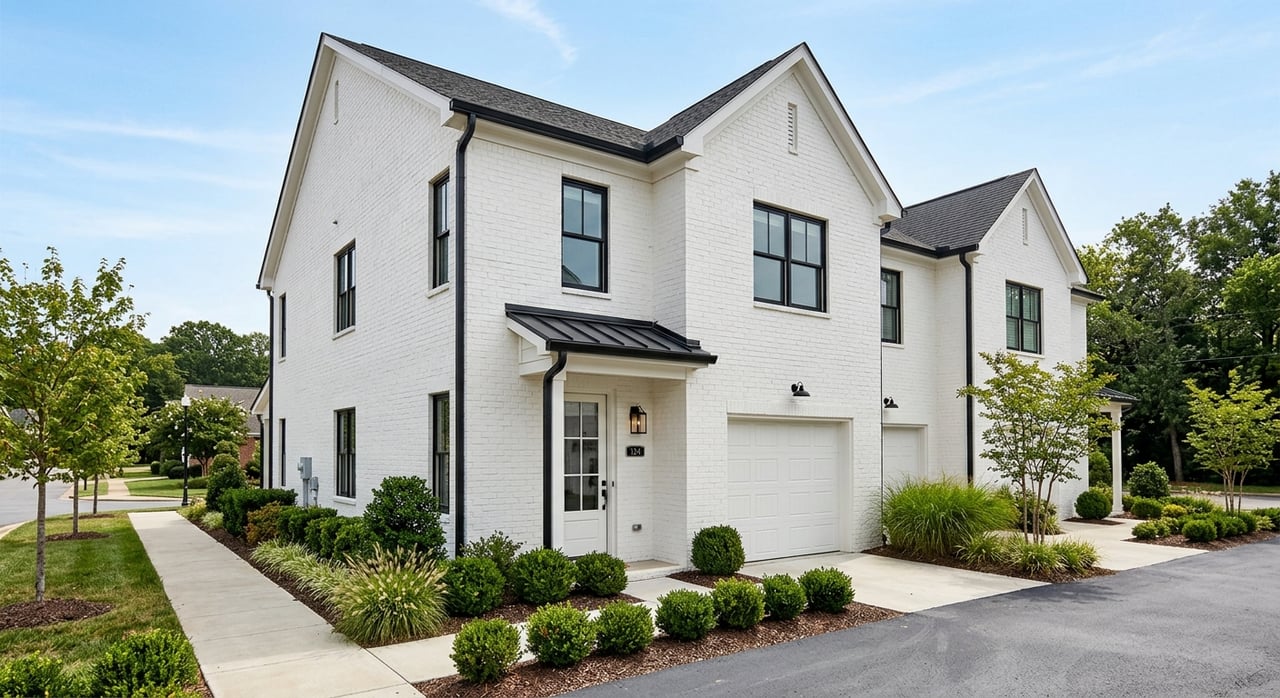
Are Cedar Bluff Townhomes and Condos Right for You?
March 26, 2026
March 26, 2026
Looking for a low-maintenance home with an easy West Knoxville commute? If you’re considering a townhome or condo in Cedar Bluff, you’re in good company. Many buyers choose 37923 for its convenient location, lock-and-leave lifestyle, and approachable price points compared to detached single-family homes. In this guide, you’ll learn what to expect in local communities, how HOA fees work, key legal and financing checks, and the exact questions to ask before you write an offer. Let’s dive in.
Cedar Bluff sits in West Knoxville along North Cedar Bluff Road, just north of the I-40 and I-75 corridors. The area blends residential neighborhoods with nearby shopping and office parks, which helps explain its strong appeal for commuting and everyday convenience. You can confirm the neighborhood’s location and context in the Cedar Bluff overview.
As of early 2026, zip-level medians in 37923 generally fall in the mid-300s to low-400s, with individual communities and floor plans ranging above or below that mark. Actual pricing shifts month to month, so use live, local comps when you get serious about a specific unit.
Most Cedar Bluff condos run 2 to 3 bedrooms and roughly 1,000 to 1,600 square feet, with some larger single-level or stacked configurations approaching 1,800 to 1,900 square feet. Townhomes often include more space, multiple levels, and private outdoor areas that feel closer to single-family living but with less exterior maintenance.
Expect a mix of assigned surface parking in low-rise condo communities and 1 to 2-car garages in many townhome-style developments. Visitor spaces are common. End-units in some clusters feature two-car garages and a little extra elbow room.
Amenities vary widely. Many condo communities advertise a pool, tennis, and landscaped grounds. Typical HOA coverage includes exterior building maintenance, grounds care, trash, and the master insurance policy. HOA dues range from very low in simple townhome subdivisions to higher monthly amounts in amenity-rich condo communities.
If an association maintains more complex features like a pool or elevator, expect higher dues to match that scope.
While each property is unique, here’s a helpful framework based on recent local patterns:
Treat these as directional guideposts. Your actual search should factor in the community’s amenities, age of major systems, HOA financial health, and available parking. A local side-by-side comparison of recent sales will tell the full story.
Buying into a condo or townhome community means you are also buying into the association’s budget, rules, insurance, and long-term planning. Get the full picture early so there are no surprises at closing.
Ask for the association’s resale or estoppel certificate and the complete resale packet. This should show current dues, any unpaid charges, transfer fees, special assessments, governing documents, financial statements, and insurance declarations. For a plain-English overview of resale and estoppel certificates in Tennessee, see this explainer on resale certificates and estoppels. In practice, producing these documents can take about 10 business days, and associations often charge a fee. For timing expectations and who pays the fee, review this short guide to HOA estoppels and turnaround times.
Healthy reserves matter. Ask for the most recent reserve study, the percent funded, and any upcoming capital projects over the next 1 to 3 years. Best practice is to update full reserve studies on a regular cadence, often about every three years, with interim reviews in between. Learn more about reserve study frequency from Reserve Advisors’ guidance.
Red flags include no recent reserve study, very low reserve balances, or big projects on the horizon without a clear funding plan. Meeting minutes often reveal what the board is contemplating and how they plan to pay for it.
Tennessee law requires condominium associations to carry property insurance on the common elements and, where applicable, unit structures, so that the total amount after deductibles is not less than 80 percent of replacement cost. The statute also addresses liability insurance and certain policy provisions. Review the master policy carefully and match your personal HO-6 policy to fill gaps, including improvements and loss assessment coverage. Read the statutory insurance guidance in Tenn. Code § 66-27-413.
Also ask about the master policy deductible. Very high deductibles can shift more risk to owners in a building claim. The declarations page should clearly state the limits and deductibles.
Under the Tennessee Condominium Act, the association has a lien for unpaid assessments and can enforce that lien. This is a good reason to check the current delinquency rate and whether any units are in foreclosure. You can review lien and enforcement provisions in Tenn. Code § 66-27-415.
If you plan to use FHA or VA financing, confirm the project’s eligibility up front. Lenders review the project for owner-occupancy ratios, reserves, delinquencies, insurance, and pending litigation. Some projects are approved, while others might allow single-unit approvals on a case-by-case basis. See the overview of FHA condo project approval standards in this condominium project approval guide.
To compare a condo or townhome with a detached single-family home, focus on the total monthly carrying cost. A quick formula to keep handy:
Remember that HOA dues often cover items you would otherwise pay for separately, like exterior maintenance, grounds care, a portion of building insurance, and trash. For example, if a condo lists at $300,000 with a $200 monthly HOA that covers exterior work and trash, that $2,400 per year should be considered when weighing a slightly higher-priced single-family home where you would pay for those services out of pocket. Always re-calc with current rates and actual service costs.
Documents to request
Key questions to ask
What are the exact monthly or quarterly dues, due date, and late fees, and what do dues include?
When was the most recent reserve study completed, what is the percent funded, and what is the recommended annual reserve contribution? Was a site visit performed? See reserve study cadence in this reserve study guidance.
What is the current reserve cash balance, and how does the association plan to fund capital projects in the next 1 to 3 years?
Are there any pending or approved special assessments or planned capital projects in the next 12 to 36 months? If yes, how much and what is the payment schedule?
What is the current delinquency report, including the number or percent of owners more than 30, 60, and 90 days overdue? Any units in foreclosure?
Is there any pending or threatened litigation? If so, how is legal expense being handled in the budget?
Please provide the insurance declarations page showing carriers, property and liability limits, master policy deductibles, and whether the policy is “all-in” or “bare walls” coverage. Review Tennessee’s requirements in Tenn. Code § 66-27-413.
What is the estoppel or resale certificate fee, typical turnaround time, and who customarily pays this fee? See timing basics in this estoppel guide.
What are the rental or lease rules, including any caps, minimum lease terms, and owner-occupancy requirements?
Is parking deeded or assigned, are there guest spaces, and what is the policy on EV charging?
Is the association professionally managed or self-managed, and what is the term of the management contract?
Are there any vendor contracts with automatic renewals or unusual cancellation terms that impact the budget?
Has the association applied for or received FHA, VA, Fannie, or Freddie approval, and if not, is the board planning to pursue it? For FHA context, see this condo project approval overview.
How to use the answers
If you are weighing a condo or townhome as a rental, confirm lease rules early and compare local rent benchmarks to carrying costs. You can get a quick sense of area rents using a neutral tool like Rentometer’s 37923 overview. Factor in HOA rules on lease terms, any rental caps, and possible seasonality in demand.
Buying into a condo or townhome community is part property and part paperwork. You deserve a guide who can help you evaluate both with clarity and care. With appraisal-backed pricing insight, neighborhood-level experience in West Knoxville, and a concierge approach to inspections, repairs, and closing, you get more than a tour schedule. You get a steady advocate who helps you understand value, spot red flags, and move forward with confidence.
If you are ready to explore townhomes and condos in Cedar Bluff, let’s connect. Reach out to Jennifer Whicker to start a focused search, review HOA documents side by side, and craft a winning offer.
Stay up to date on the latest real estate trends.


With me, what you see is what you’ll get. I’ll give you honest advice, enable you to think outside the box, and will be patient and never pushy. I’ll help you with decision-making and advocating, and make sure everything is moving forward. Your peace of mind is my priority. Whether you’re a first-time buyer or a seasoned seller, I’d love to be your Knoxville Realtor®.