What HOA Amenities Look Like In Hardin Valley Communities
May 14, 2026
May 14, 2026
If you are house hunting in Hardin Valley, HOA amenities can look very different from one neighborhood to the next. You might tour one community with a pool, clubhouse, and walking trails, then visit another where the HOA mainly covers common-area upkeep and design rules. Understanding that difference can help you avoid surprises, compare true monthly costs, and choose a neighborhood that fits how you want to live. Let’s dive in.
Hardin Valley is more of a community area than a single formal municipality, and local planning work shows that residents care about transportation, neighborhood character, quality of life, parks, and shared spaces. Local priorities have also included roadway safety, preserving open space, and creating more opportunities to walk and bike.
That helps explain why HOA amenities in Hardin Valley often go beyond a simple entrance sign or mailbox area. In many neighborhoods, you will see a mix of outdoor spaces, pedestrian features, landscaping, and rules designed to keep a consistent look across the community.
Most HOA amenities in Hardin Valley support everyday neighborhood living rather than highly specialized recreation. The most common features tend to be pools, clubhouses, trails or sidewalks, landscaped green space, and maintenance-related services.
Some communities offer a fuller amenity package, while others keep things simple. That means the best question is not just whether a neighborhood has an HOA, but what that HOA actually provides.
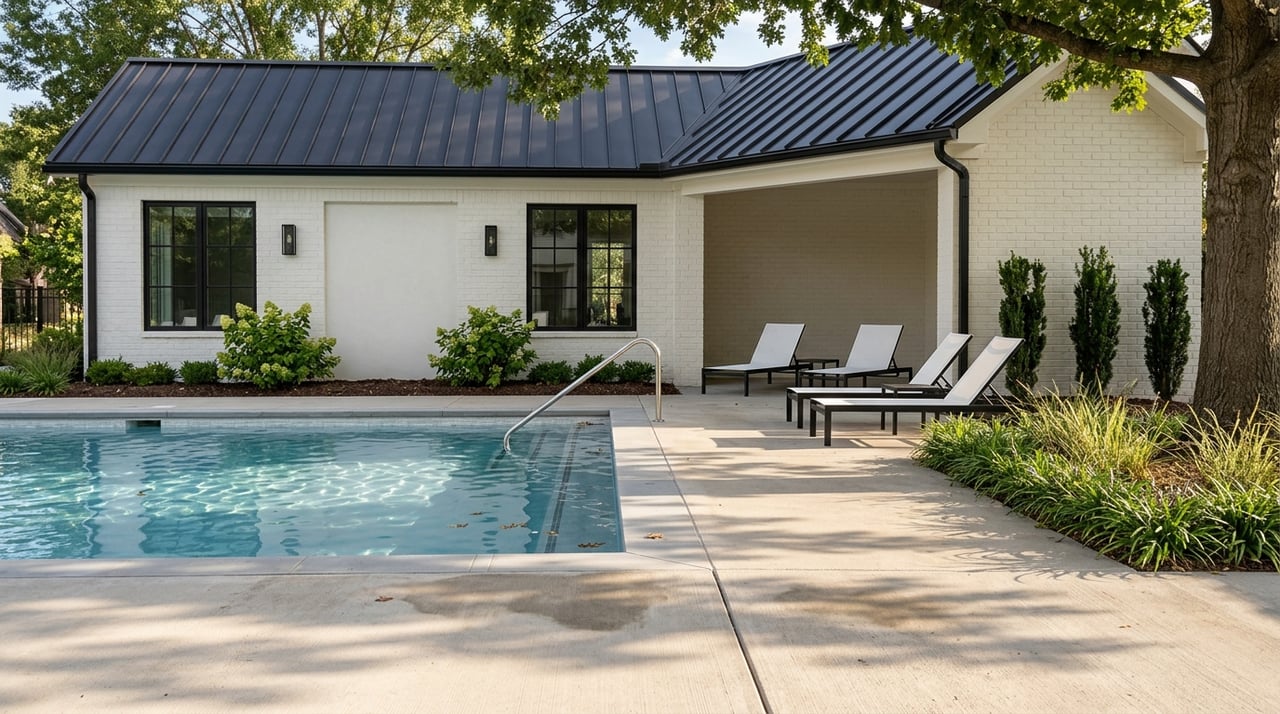
Covered Bridge at Hardin Valley is a strong local example of a more amenity-rich HOA setup. Its listed amenities include a resident clubhouse, pool, activities field, and walking trails.
The clubhouse is described as a resident facility used for parties and events, and the pool is intended for residents with guest access tied to resident supervision. If a neighborhood advertises these kinds of shared spaces, it is worth asking how access works and whether there are usage rules.
Walking trails and landscaped open areas show up often in Hardin Valley communities. Sycamore Creek at Hardin Valley lists a walking trail, pocket park, street lights, and landscaped common areas, while Covered Bridge includes an asphalt trail with benches and an activities field bordered by creeks.
These features match the broader priorities identified in local planning work, where residents emphasized walkability and open space. For many buyers, that makes trails, sidewalks, and green space some of the most valuable day-to-day amenities in the neighborhood.
Some Hardin Valley HOAs place a strong focus on appearance and visual consistency. Covered Bridge guidelines, for example, reference heavily landscaped sites, consistent mailbox design, and screening for HVAC equipment and trash-can storage.
That kind of HOA structure can appeal to buyers who want a more uniform neighborhood appearance. It also means you should expect rules that affect what you can see from the street and how exterior spaces are maintained.
In Hardin Valley, HOA communities often fall into three broad categories. Knowing which model you are looking at can make it much easier to compare neighborhoods.
This model usually includes features like a pool, clubhouse, and shared recreation spaces. Covered Bridge is the clearest local example, with amenities that function as both lifestyle features and community gathering spaces.
If you want built-in places for recreation and neighborhood events, this kind of HOA may feel like the best fit. In return, you should expect more detailed rules and typically higher dues than a lighter-governance community.
Some neighborhoods lean more toward convenience than recreation. Sycamore Creek is a good example, with dues of $195 per month that cover mowing and mulching for every home, along with shared features like a walking trail, pocket park, street lights, and landscaped common areas.
This setup may work well if you want less exterior upkeep on your own to-do list. The value comes not only from physical amenities, but also from services that simplify day-to-day ownership.
Other communities operate with a leaner HOA structure. Hardin Valley Vista lists $125 annual dues and provides access to board information, meeting minutes, covenants, bylaws, and budget materials, along with ARC applications for exterior changes.
In neighborhoods like this, the HOA may be less about large amenity packages and more about administration, common-area oversight, and architectural review. That can mean lower recurring costs, but also fewer shared features.
When buyers think about an HOA, they often focus on the pool or walking trail first. In practice, the covenants and review process can shape your daily experience just as much as the amenities do.
Covered Bridge uses an Architectural Control Committee to preserve harmonious design and neighborhood continuity. Its guidelines include a multi-step approval process for construction, review of exterior materials and colors, minimum home-size standards, and limits on visible mechanical equipment and exposed garbage areas.
Sycamore Creek also uses an architectural review structure. Its covenants show rules related to common areas, signs, walls, fences, sidewalks, landscaping, trash storage, and pets.
Hardin Valley Vista reinforces this same idea from the administrative side by requiring ARC requests for architectural changes. So if you are comparing neighborhoods, remember that HOA living is not just about what you get, but also what approval may be required before you make exterior changes.
Before you buy in an HOA community, ask for the full document package and read it carefully. This step can help you understand the true cost, the level of oversight, and whether the neighborhood fits your comfort level.
Here are the core items to review:
Hardin Valley Vista’s homeowner document access is a good local example of the types of records buyers should expect to see in an HOA-managed neighborhood.
In Knox County, the Register of Deeds is the official record keeper for real-property documents. Covered Bridge’s guidelines specifically note that its controlling covenants and restrictions are recorded there.
That matters because recorded declarations and amendments are not just informal neighborhood preferences. They are part of the legal framework tied to the property, which is why reviewing them before closing is so important.
A quick amenity tour can be helpful, but it should not be your only source of information. You will want clear answers to a few practical questions before moving forward.
Dues may pay for amenities, mowing, mulching, common-area landscaping, lighting, administration, or a combination of those items. Sycamore Creek shows how dues can include lawn-care services, while Hardin Valley Vista appears to operate with a much lighter scope.
Some amenities are for residents only, with guest access limited or supervised. Covered Bridge’s pool rules are a good example of how access can be more specific than buyers expect.
Exterior changes may require approval before work begins. Depending on the neighborhood, that could include fences, paint colors, additions, mailboxes, screening, and other visible updates.
Some declarations allow assessments for maintenance or capital improvements. That does not mean one is guaranteed, but it does mean buyers should understand the possibility before they commit.
HOA dues are usually paid directly to the association rather than bundled into the mortgage payment. That means you should treat them as part of your full monthly housing budget alongside principal and interest, property taxes, insurance, and maintenance.
The local range in Hardin Valley shows why this matters. A neighborhood with $195 per month dues and lawn-care service offers a very different value proposition from one with $125 annual dues and a lighter amenity load.
Higher dues do not automatically mean better value. The real question is whether the services, shared spaces, and rules align with your budget and priorities.
For some buyers, an HOA neighborhood offers welcome predictability. Shared amenities, maintained common areas, and a more consistent neighborhood appearance can make daily life feel easier and more organized.
For others, a non-HOA area may offer more flexibility. You may have fewer recurring neighborhood charges and more freedom over exterior changes, but you will also take on more responsibility for maintenance and overall property appearance yourself.
Neither option is universally better. The right fit depends on how much structure, convenience, and shared upkeep you want in your day-to-day ownership experience.
In Hardin Valley, HOA amenities usually fall into one of three buckets: shared lifestyle features like pools and clubhouses, maintenance-oriented features like trails and landscaped common space, or lighter-governance communities focused more on order and oversight. The key is to compare the dues, the service list, and the restrictions together rather than looking at any one piece in isolation.
If you want help comparing Hardin Valley neighborhoods, reviewing what HOA dues really buy, or narrowing down communities that match your budget and lifestyle, Jennifer Whicker can guide you through the details with the kind of local, one-to-one support that helps you move with confidence.
Stay up to date on the latest real estate trends.


With me, what you see is what you’ll get. I’ll give you honest advice, enable you to think outside the box, and will be patient and never pushy. I’ll help you with decision-making and advocating, and make sure everything is moving forward. Your peace of mind is my priority. Whether you’re a first-time buyer or a seasoned seller, I’d love to be your Knoxville Realtor®.