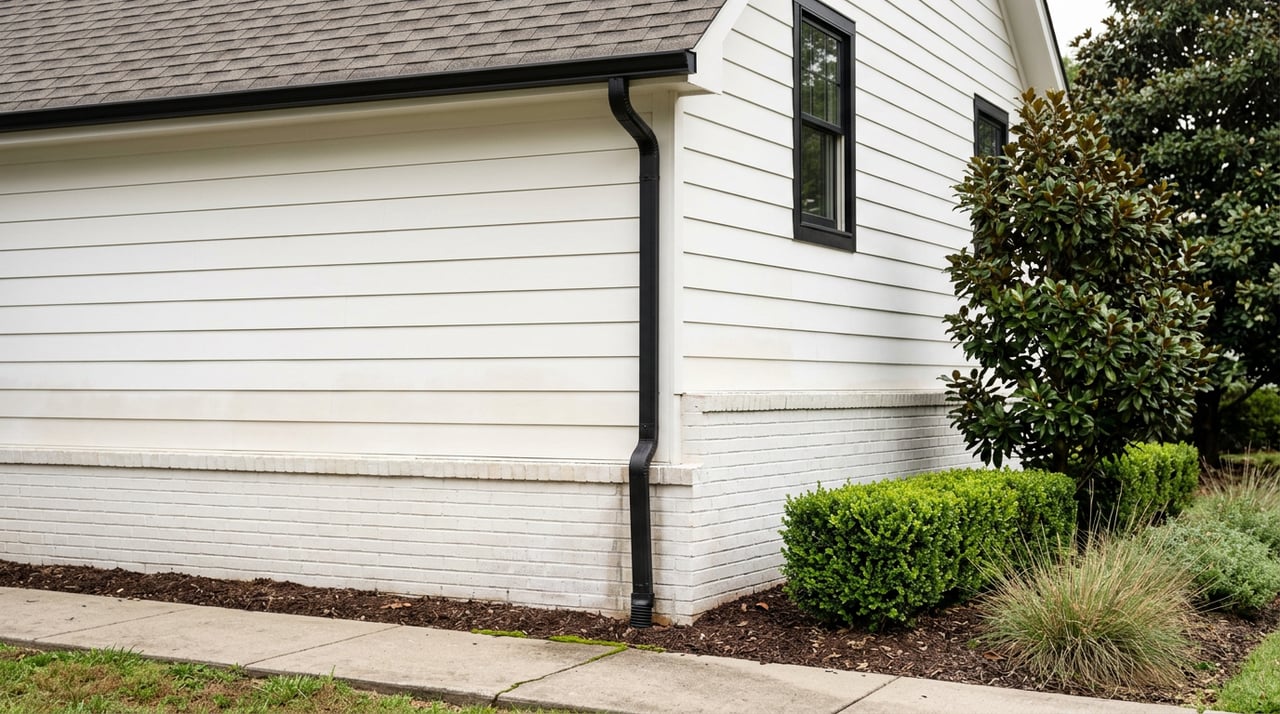
What Older Farragut Inspection Reports Can Tell You
September 24, 2026
September 24, 2026
The inspector's flashlight found it first: a stair-step crack running up the block foundation wall of a 1979 Fox Den ranch, just past the crawlspace access. The buyer standing behind him went quiet. Twelve years of HGTV had trained her to read that crack as one word: foundation. The inspector didn't flinch. He'd seen the same pattern in a dozen homes on the same street, all built the same decade, all sitting on the same shifting clay-and-limestone soil that defines this part of West Knox County. He measured the crack width, checked for recent movement, and moved on to the crawlspace vents.
That moment is the whole story of buying an older home in Farragut. The report you get back after inspection week depends less on how well the house was maintained and more on which decade your subdivision was platted. A buyer under contract in Fox Den is reading a different document than a buyer under contract in Village Green, even if both houses are in excellent condition. Knowing which document you're supposed to be reading, before the inspector ever shows up, changes how you negotiate.
Farragut's older neighborhoods didn't all arrive at once. Fox Den took shape starting in the late 1960s around its country club, which opened in 1968, and filled in through the 1970s and 1980s. Fox Run and Concord Hills followed a similar timeline, built off Kingston Pike and Concord Road as some of the area's earliest subdivisions. Village Green came later, in the 1990s and early 2000s, built as a planned community with pools and a clubhouse from the start. Saddle Ridge, on Farragut's western edge, is newer still.
That gap matters more than most buyers expect.
| Neighborhood | General era built | What tends to show up |
|---|---|---|
| Fox Den, Fox Run, Concord Hills | 1970s to 1980s | Block foundation settling, crawlspace moisture, aging original systems |
| Village Green | 1990s to early 2000s | Roof and HVAC age, fewer foundation flags |
| Saddle Ridge and newer western Farragut | 2000s and later | System wear, drainage grading, less foundation movement |
A 1970s block foundation has had fifty years to settle into East Tennessee's soil. That soil sits over a karst layer, limestone and dolomite that groundwater slowly dissolves, which is why this part of the county sees more gradual soil movement than newcomers from flatter states expect. The overwhelming majority of what an inspector flags in a Fox Den or Fox Run crawlspace is old, slow, and manageable. It reads as alarming on paper because inspection reports are written to disclose everything, not to rank severity.
That same limestone geology puts Knox County in the Environmental Protection Agency's highest radon risk zone, Zone 1, regardless of a home's age or construction style. It's why local firms like Rock Solid Home Inspections recommend continuous radon monitoring on every Knoxville-area purchase, not just older homes. A test runs roughly $150 to $200. If levels come back elevated, a mitigation system costs $800 to $2,500 and resolves the problem permanently. Elevated radon is a fix, not a reason to walk away from a house you otherwise love.
Buying a forty-year-old home in this market usually means coordinating more than one inspector. Here's who typically shows up between the accepted offer and the closing table, and what each one costs on a general Farragut home:
That last one is the detail most first-time buyers skip and shouldn't. A structural engineer's written opinion is the cheapest disinterested read you can get on a scary-looking crack, and it turns a vague fear into a scoped, priceable fact before anyone who sells foundation repair walks through the door.
Around Knoxville, inspection windows shrink fast in competitive situations because buyers offer a shorter window to make their bid look stronger.
That's exactly why current conditions matter. Over the three months ending in May 2026, homes in Farragut sold after an average of 66 days on market, up from 56 days over the same stretch the year before. That's a modest shift, not a reversal, but it means the pressure to shave your inspection window down just to win a multiple-offer situation has eased compared to a year ago. Buyers moving through an older Fox Den or Village Green home right now have more real room to ask for the full contracted period, get the structural engineer out if something looks off, and actually read the report before deciding anything.
A long inspection report on an older home is not a verdict. It's the start of a short, structured negotiation, and the calm buyer usually does better in it than the buyer who reacts to the page count. The strongest asks tend to be narrow: a repair credit for the two or three items that are genuinely worth fixing now, not a demand that the seller address every line on a document that's designed to be exhaustive.
This is also where the difference between a home inspection and a lending appraisal starts to matter. An inspector documents condition. An appraiser weighs whether that condition affects value and by how much. A stair-step crack that the inspector flags and the structural engineer confirms is old and stable rarely moves an appraisal at all. The same crack, undocumented and unexplained, can make an appraiser more conservative simply because there's no paper trail showing it's been evaluated. Knowing which flags are cosmetic aging and which ones actually touch value is where having someone in your corner who understands both sides of that conversation starts to pay off, especially if you're comparing an offer against what the house might appraise for.
Sellers in these older neighborhoods can get ahead of the same conversation. A pre-listing inspection on a Fox Den or Fox Run home won't eliminate the crawlspace conversation, since the crawlspace is going to say what it's going to say. It does let a seller walk into negotiations with the engineer's letter already in hand instead of scrambling for one after a buyer's inspector raises a flag.
Is a foundation crack in an older Farragut home always a dealbreaker? No. Most cracks an inspector flags in 1970s and 1980s block foundations reflect decades of slow, typical settling in this region's soil. The way to know for certain is a written opinion from an independent structural engineer, not a verbal reassurance from whoever shows up to sell you a repair.
Do I need a sewer scope on every older home? It's one of the better-value add-ons available, particularly on anything with original pre-1990s drain lines, where clay or cast-iron pipe is more prone to root intrusion over time.
Is radon testing required in Tennessee? It isn't legally mandated on a resale purchase, but Knox County's Zone 1 designation makes it one of the more worthwhile optional tests available, and it's inexpensive relative to what a mitigation system costs if levels come back high.
An inspection report on an older Farragut home is a lot of pages written to disclose everything a licensed inspector can see. Reading it well means knowing which of those pages describe your specific subdivision's decade, and which describe every fifty-year-old house in this part of Tennessee. If you're weighing an offer on a Fox Den classic or getting a Village Green home ready to list, Jennifer Whicker works from the buyer's side of that report and the appraiser's side of the value question, in the same conversation. Request a free home valuation to start figuring out what your specific house, cracks and all, is actually worth in today's market.
This article is general information, not legal, tax or financial advice. Consult a qualified professional about your situation.
Stay up to date on the latest real estate trends.


With me, what you see is what you’ll get. I’ll give you honest advice, enable you to think outside the box, and will be patient and never pushy. I’ll help you with decision-making and advocating, and make sure everything is moving forward. Your peace of mind is my priority. Whether you’re a first-time buyer or a seasoned seller, I’d love to be your Knoxville Realtor®.